
24 February 2026
Systems
Operations
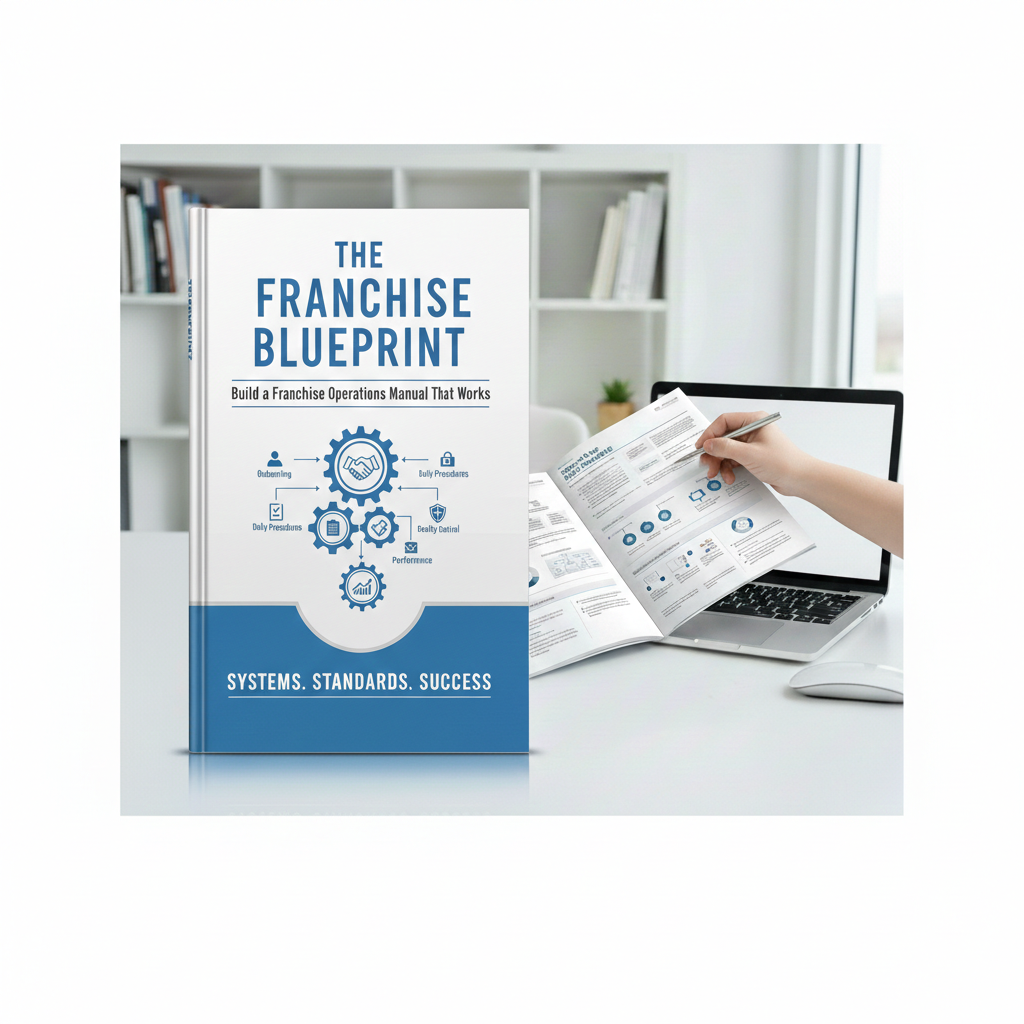
A franchise operations manual is not simply a document it is the operating blueprint of the franchise system. It translates a successful business model into structured, repeatable processes that allow multiple franchisees to deliver consistent performance across different locations.
Without a strong operations manual, franchising becomes difficult to control, impossible to scale, and vulnerable to inconsistency. The manual ensures that every franchisee understands how to operate the business, meet brand standards, and protect the integrity of the system.
In franchising, replication is everything and the operations manual makes replication possible.
A well-developed franchise operations manual serves four core functions:
1. Standardisation
It ensures every location delivers the same product, service, and customer experience.
2. Training Foundation
It forms the backbone of franchisee and staff training programs.
3. Risk Management
It reduces operational errors, compliance breaches, and reputational damage.
4. Scalability
It allows the franchisor to expand without being involved in every operational detail.
If procedures only exist in the founder’s head, the business is not ready to franchise. A franchise-ready business must be documented, structured, and systemised.
Before building an operations manual, the underlying business model must be proven, profitable, and replicable.
A manual cannot compensate for a business that lacks:
If the model only works under the direct involvement of the founder, it is not yet ready for franchising.
Developing an operations manual should follow a thorough franchise feasibility assessment. The documentation must reflect a model that has already demonstrated sustainability and scalability.
Franchising is not about documenting theory, it is about systemising a proven reality.
Many franchisors make one of two mistakes: they either oversimplify the manual or overcomplicate it.
Some manuals are too vague and leave franchisees guessing. Others read like legal documents and are too complex to use practically.
An effective operations manual should:
If franchisees cannot quickly find what they need, they will not use the manual consistently.
The most effective manuals are built around how the business actually operates.
Franchisees should be able to easily reference:
Instead of presenting abstract policies, the manual should function as a practical operating guide.
These sections should be detailed and checklist-driven. They should cover:
Clear opening and closing routines reduce errors and improve accountability.
Consistency in product or service delivery is the heart of franchising.
If the franchise is product-based, the manual must include:
If the franchise is service-based, it should include:
This section protects brand reputation and ensures customers receive the same experience at every branch.
Inventory mismanagement is one of the most common operational challenges in franchise systems.
A strong manual should outline:
Where franchisors require centralised purchasing, these processes must be clearly documented to prevent inconsistency and unauthorised sourcing.
Franchisees often struggle most with managing people.
An operations manual should include guidance on:
This ensures franchisees build teams that align with the brand culture and deliver consistent service.
Financial discipline is critical in franchising. The manual must clearly explain:
Franchisees should understand exactly what financial information must be tracked and submitted, and how performance will be measured.
Clear financial procedures reduce disputes and improve transparency across the network.
Marketing inconsistency can quickly damage a franchise brand.
The operations manual should include:
This ensures that franchisees can market effectively without compromising brand integrity.
Every franchise system must operate within legal and regulatory requirements. The manual should cover:
This protects both the franchisor and the franchisee while ensuring professional operation.
While a comprehensive operations manual is essential, documentation alone does not create a successful franchise system.
Many franchisors assume that once the manual is complete, replication will follow automatically. In reality, the manual is only one component of a broader franchise infrastructure.
An operations manual must be supported by:
Without training, franchisees may misinterpret procedures.
Without monitoring, operational drift occurs.
Without accountability, brand standards weaken over time.
A franchise system succeeds not only because processes are documented, but because they are implemented, measured, and continuously reinforced.
An operations manual must be user-friendly. It should include:
Many modern franchise systems use secure digital platforms to host manuals, allowing updates and version control. A digital manual ensures franchisees always operate from the most current procedures.
A franchise system evolves over time. New products, improved processes, and updated regulations require changes to documentation.
A strong franchisor treats the operations manual as a living document, reviewing it regularly and updating it when necessary. An outdated manual becomes a liability.
Even well-written manuals can fall short of franchise standards. Common red flags include:
If the manual has not been tested outside of the original business location, it may not withstand multi-unit replication.
A franchise-ready manual must function effectively in different locations, under different operators, while maintaining brand integrity and profitability.
An operations manual should not be treated as a once-off compliance document. It is a strategic asset that directly impacts:
Well-developed manuals increase franchise valuation because they demonstrate system maturity and risk control.
Building a manual therefore requires more than documentation skills. It requires strategic insight into operational design, financial performance, risk management, and brand governance.
A franchise operations manual is one of the most important assets in a franchise system. It protects the brand, ensures consistency, supports training, and enables scalable growth.
However, a manual that truly works is not just a collection of procedures. It is a structured, commercially aligned system built on a proven business model and supported by training, monitoring, and performance management.
In franchising, systems drive success and the operations manual is the system that makes everything else possible.
At Franchising Plus, we assist businesses in developing structured, franchise-ready systems designed for sustainable growth. From feasibility assessments to full franchise documentation and implementation strategy, our approach ensures that your operations manual is not just well written, but commercially sound, legally aligned, and built to scale.
If you are considering franchising your business, the first step is not documentation. It is strategic system design.

Is your business ready to expand but unsure of the next steps? At Franchising Plus, we specialise in guiding businesses through strategic growth, offering tailored franchising solutions and expert advice. With over 40 years of combined experience, we understand the unique challenges you face and are here to help you navigate them successfully.